What are 1990s basketball inserts, and which ones are worth money?
If this is you: you've read that the "shiny ones" are worth something, you've found a pile of them, and you want to know what you're actually holding.
Inserts are the special cards that card companies put into packs at stated odds — one per box, one per case, sometimes one per hundred cases — starting around 1990. In 1990s basketball, they're where almost all the money is. A shoebox of plain cards might be worth $20; one insert from the same box can be worth more than the box. Here's what they are, how to tell them apart from regular cards, and which names to look for.
What is an insert, exactly?
A regular card is part of the base set: one of every player, printed in the millions, one in every pack. An insert is a separate, smaller set seeded into packs on purpose so that finding one felt like winning something. The odds were printed on the wrapper: "1:24 packs," "1:360 packs," and so on. The rarer the odds, the fewer exist, and the more they're worth now.
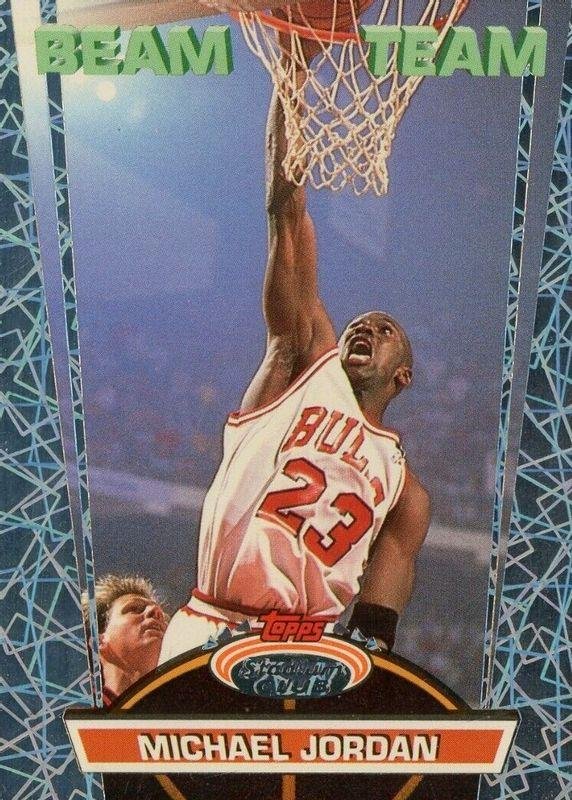
The idea took off in 1992–93 with sets like Stadium Club Beam Team, and by 1996–98 every brand had a dozen of them. That's why a box from 1996–98 is the one we most want to see.
How do I tell an insert from a regular card?
You don't need to know any set names. Hold a stack at an angle under a lamp and look for anything that:
- Reflects like a mirror or a rainbow. Refractors and Chrome cards do this. The 1993 Finest Refractors were the first, and they still look different from anything else in the box.
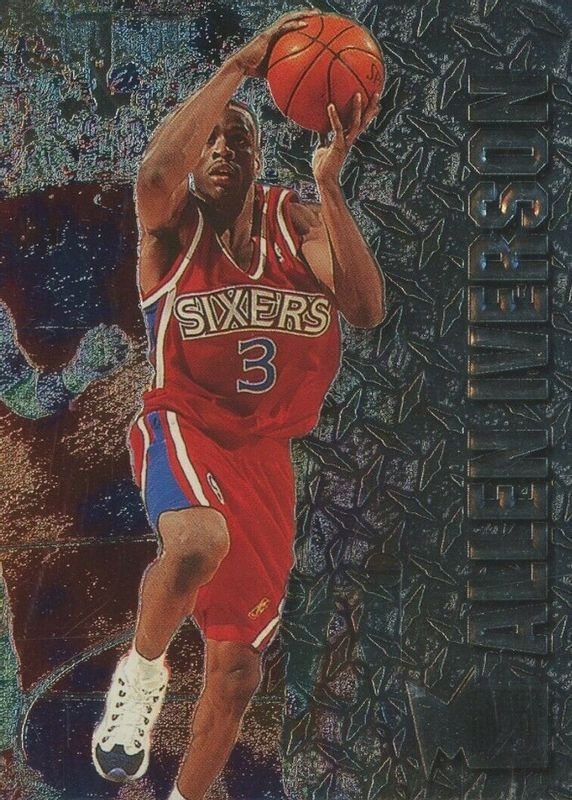
- Has etched or embossed foil. Metal and Metal Universe cards have a textured, almost industrial background you can feel with a thumbnail.
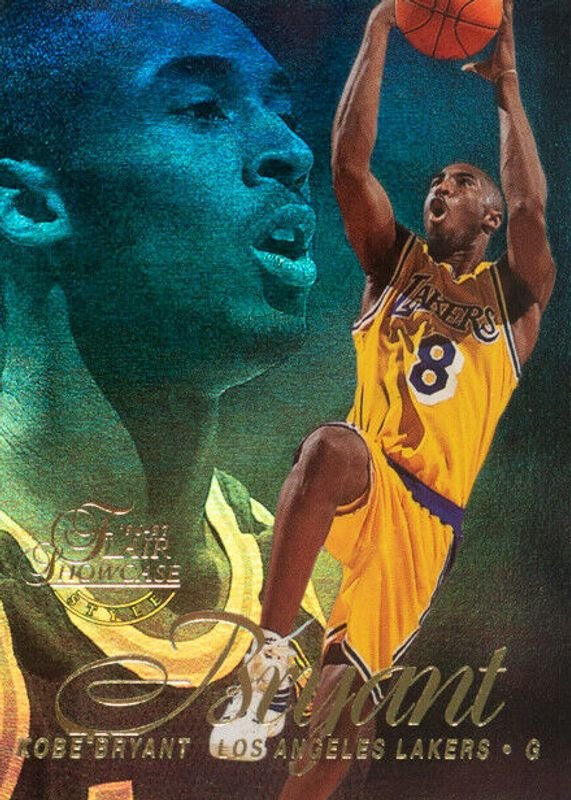
- Is noticeably thicker or heavier. Flair Showcase and Skybox E-X2000 were printed on thick stock; E-X2000 has a clear plastic panel.
- Has a serial number. "23/100" or "1 of 50" stamped on the front or back. Numbered cards are always worth a closer look, whoever is on them.
- Just looks louder. Gold foil script, lightning bolts, flames, a name in a different font from the rest of the set. If it doesn't match its neighbors, set it aside.
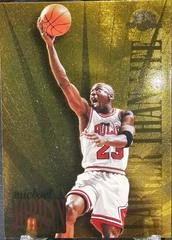
Separate shiny from plain. That's the whole job. We'll sort out what each one is.
Which 1990s basketball inserts are worth the most?
A few names come up over and over, and they're worth learning even if you never touch another card.
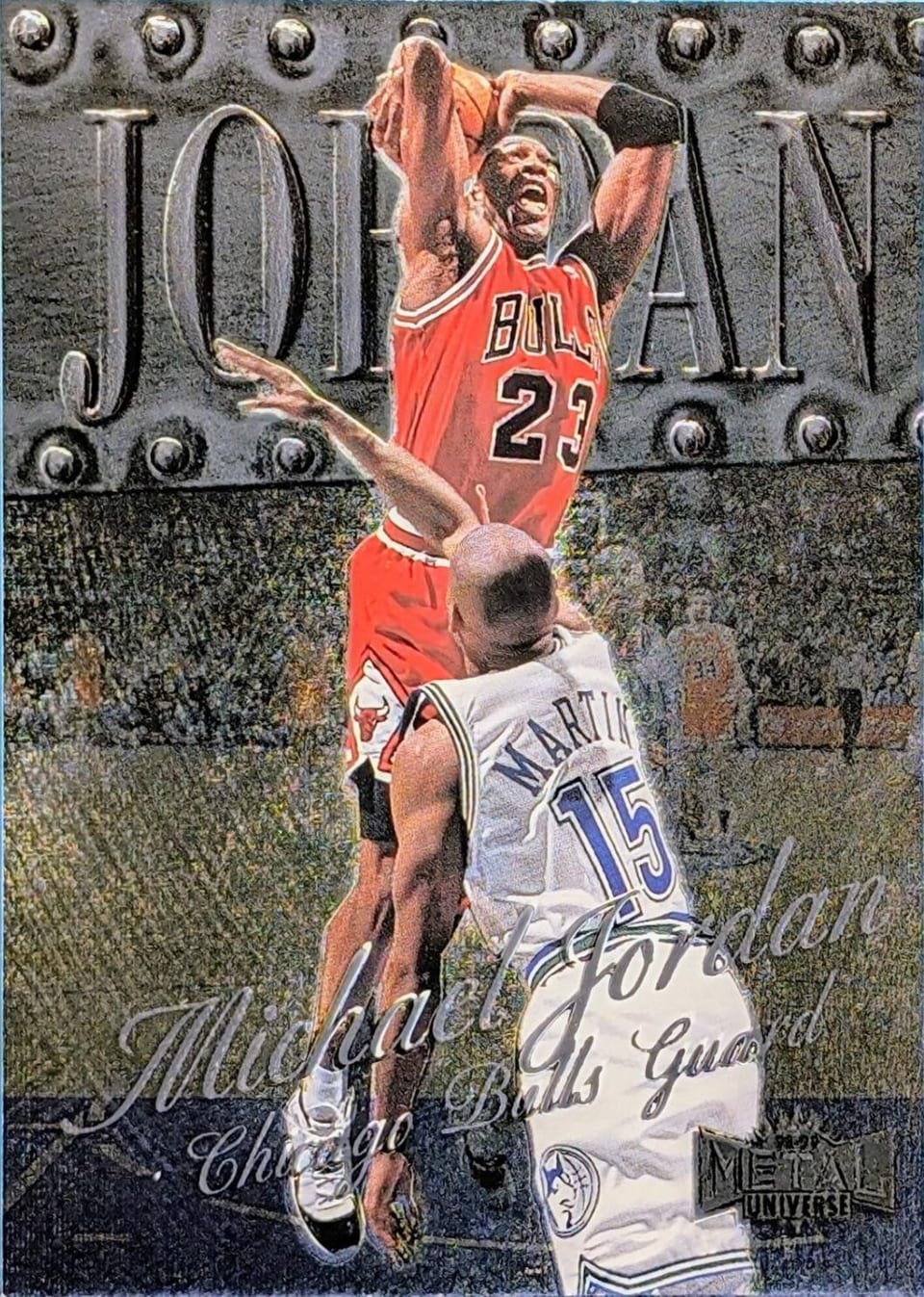
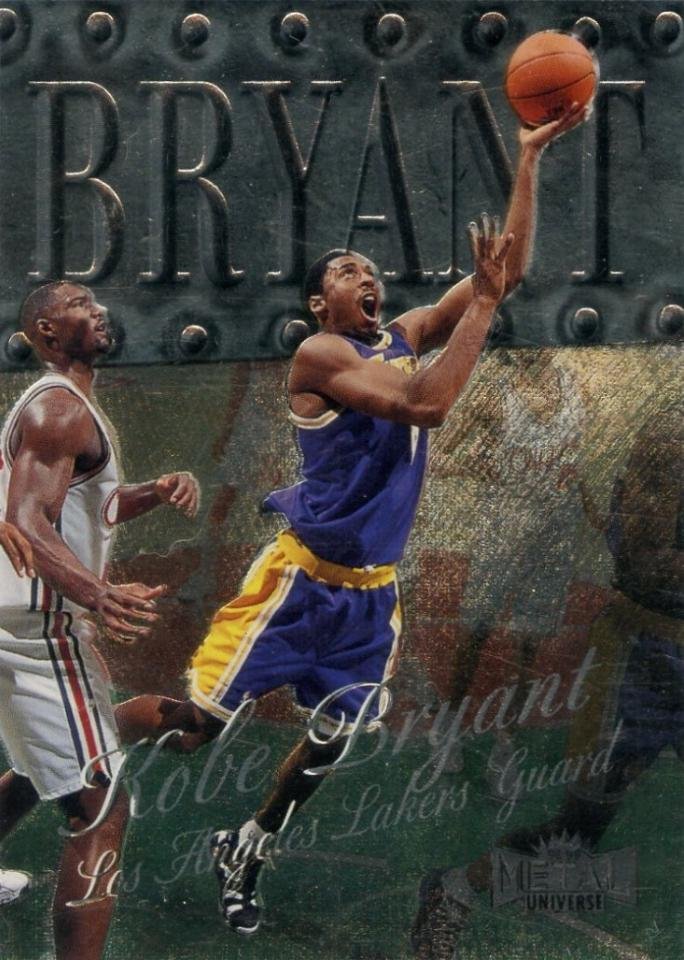
Precious Metal Gems (1997–98 and 1998–99 Metal Universe). The most famous basketball inserts of the decade. Each is serial-numbered to 100 — the first ten are green, the rest red. A Jordan or Kobe green PMG has sold for well into six figures; even role players sell for hundreds. If you find one, stop and send us a photo before you do anything else.
Refractors (Finest, Topps Chrome, Bowman's Best). The mirror-finish parallels of regular cards. Finest started in 1993–94; Topps Chrome basketball in 1996–97. A Jordan or rookie-year Kobe Refractor is real money; commons are a few dollars each.
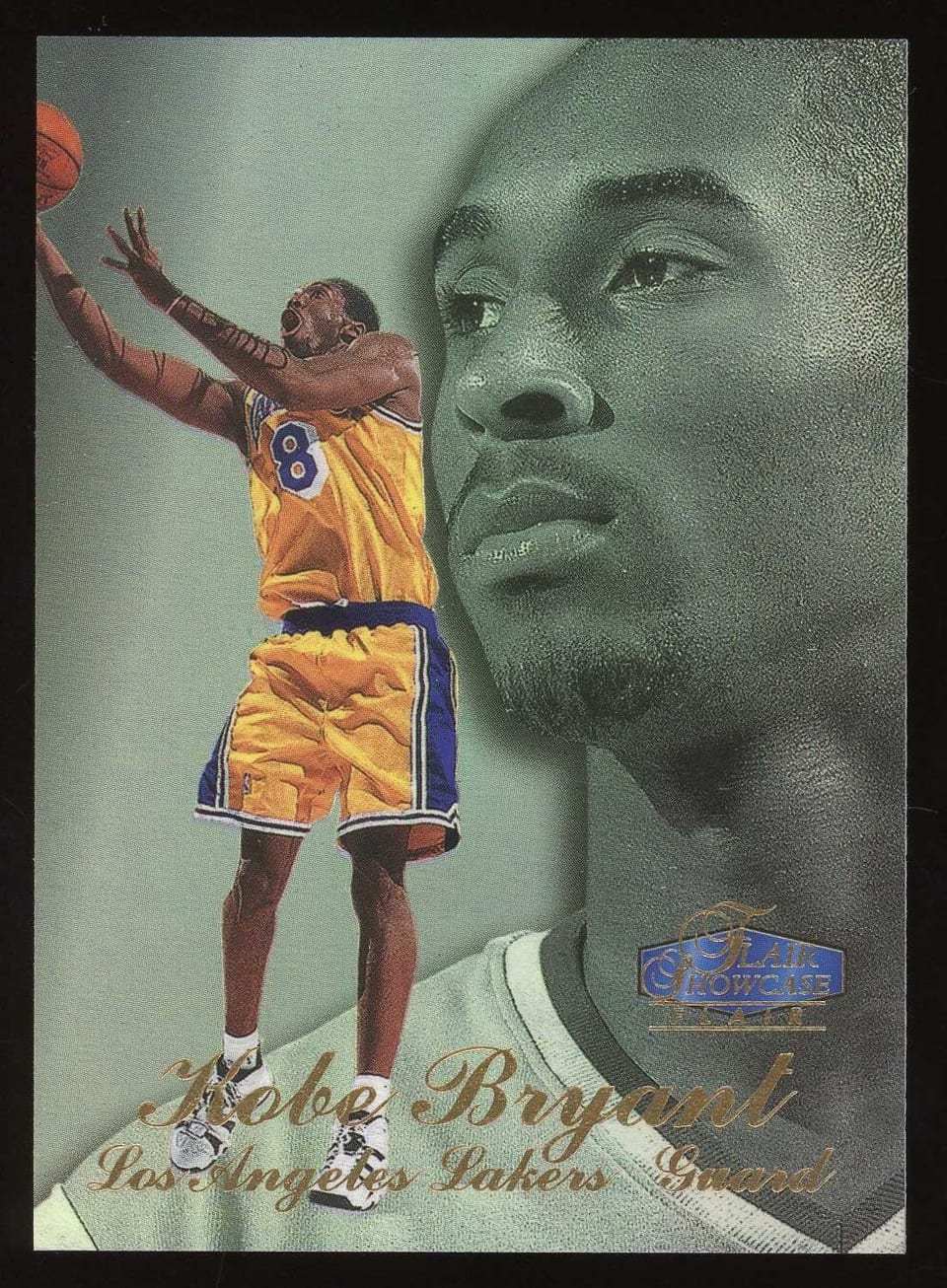
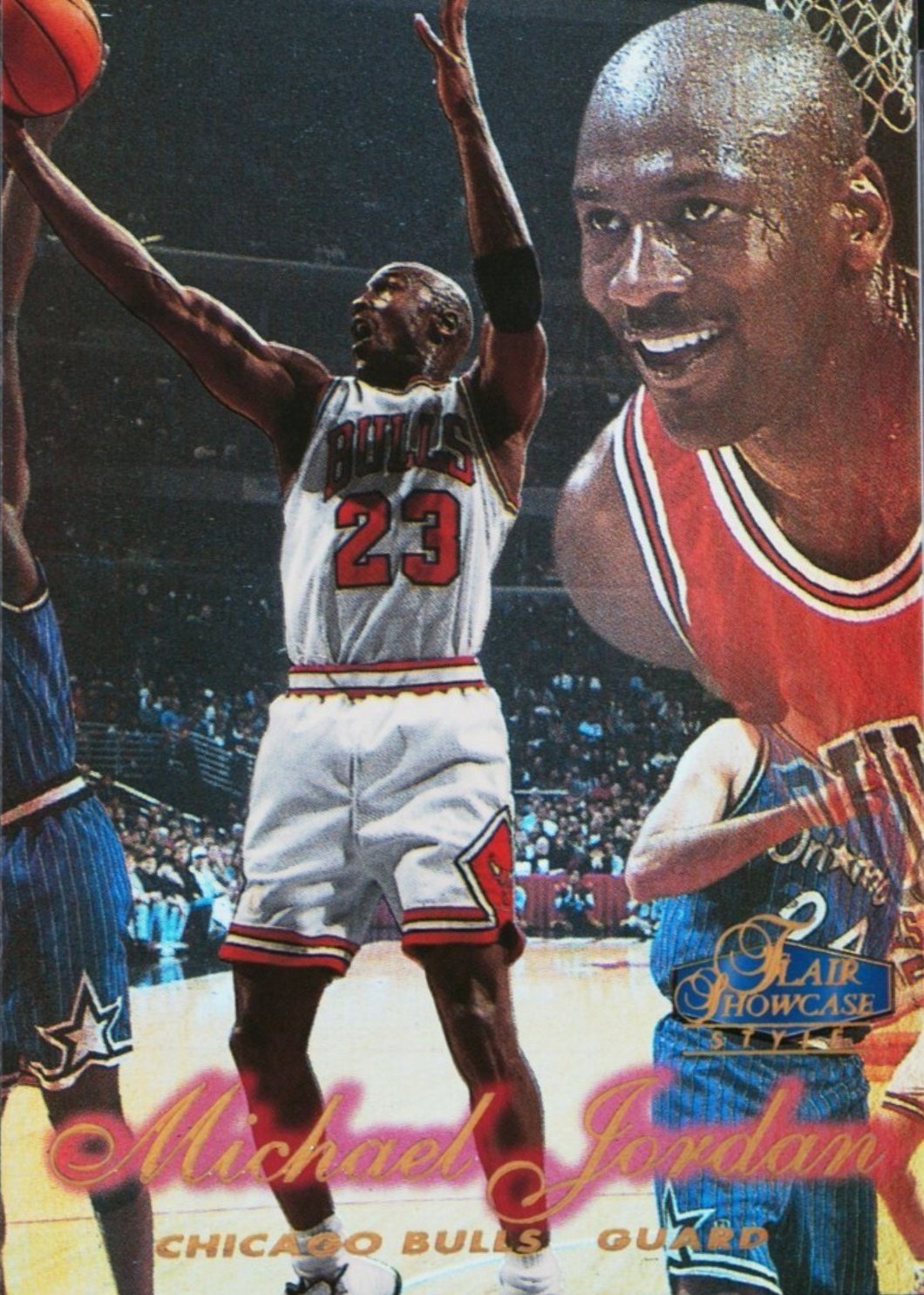
Flair Showcase (1996–97 and 1997–98). Every player came in three "rows" of different scarcity, plus a numbered Legacy Collection. Row 0 is the scarce one. The card looks the same at a glance; the row is printed on the back.
Metal Universe (1997–98 and 1998–99). Even the base cards look like inserts, which confuses people. The base cards are worth a few dollars for stars; the PMG parallels are the ones that matter.
Skybox E-X2000 and E-X2001 (1996–98). Clear plastic panel, thick card. The "Credentials" parallel is numbered to 499 and is the one to look for.
Ultra Gold Medallion, Skybox Premium and Z-Force inserts, Upper Deck SP. A tier down, but a Jordan or a rookie-year star from any of these still sells.
Does the player matter more than the insert?
Usually, yes. A rare insert of a bench player is worth something; the same insert with Jordan, Kobe, Shaq, Iverson, Garnett, Duncan, or Carter is worth ten to a hundred times more. So when you're sorting, a plain-looking Jordan goes in the "keep" pile, and a wild-looking card of someone you've never heard of goes in the shiny pile. We'll figure out the rest. Our 1990s Jordan guide walks through which Jordans are worth what.
Does condition matter on inserts?
More than on regular cards, honestly. Foil chips at the edges, refractor surfaces scratch, and thick cards get corner dings from rubber bands. A perfect copy of a good insert can be worth several times what a worn one is. So don't try to clean them, don't stack them under anything heavy, and leave the protective film on any Finest card that still has it.
What do I do with the shiny pile?
Put it in one photo. That's the third of the three photos we ask for: the whole box open, ten or fifteen cards spread face-up, and everything shiny, sealed, or in a case. If it's a box you're settling from an estate, start with the estate guide; if it's your own box from 1996 and you're finally ready, this one's for you. Either way, we'll tell you what's in the pile and what we can pay, usually the same day, and we come to you anywhere around Richmond.
Found a pile of shiny cards? Send three photos and we'll tell you what they are.
Get a cash offer