Are 1990s Michael Jordan cards worth anything?
If this is you: you found a Jordan in the box, your heart jumped a little, and now you want a straight answer before you tell anyone.
Yes, almost every one of them, but the range is enormous. A regular Jordan card from a 1990s set is worth a few dollars. A shiny or serial-numbered Jordan insert can be worth hundreds or thousands. His 1986–87 Fleer rookie is worth serious money in any condition — and it's also one of the most faked cards ever made. Here's how to tell which one you have.
Why is Jordan different from every other 90s player?
Because he never stopped being collected. Most 1990s basketball cards lost value when the market crashed in the late 90s and never got it back. Jordan cards dipped and then climbed, and they've stayed the most-searched cards in the hobby for thirty years. There's a buyer for every Jordan, which is why we tell people: if you find one, don't put it back in the box. Set it on top.
What is a regular 1990s Jordan card worth?
From 1989 through 1999, Hoops, Skybox, Fleer, Upper Deck, and Topps each put out at least one Jordan a year, and some put out five or six. These were printed in the millions. A regular one — no foil, no numbering, nothing unusual — sells for a few dollars in average shape, and somewhat more if the corners are sharp.
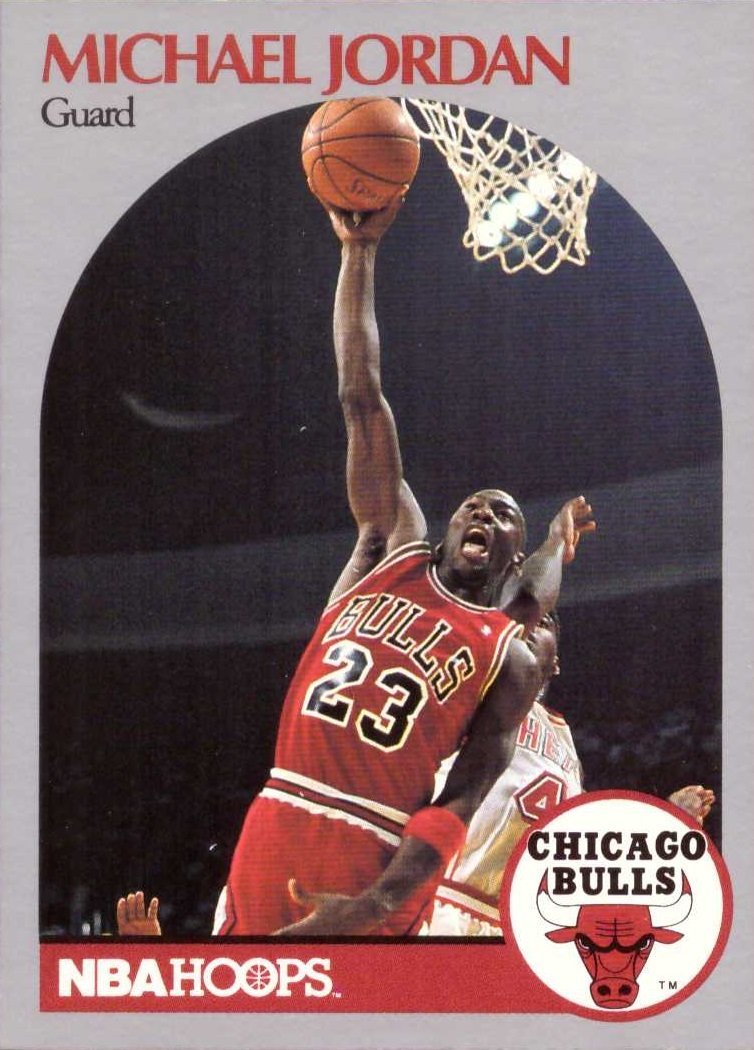
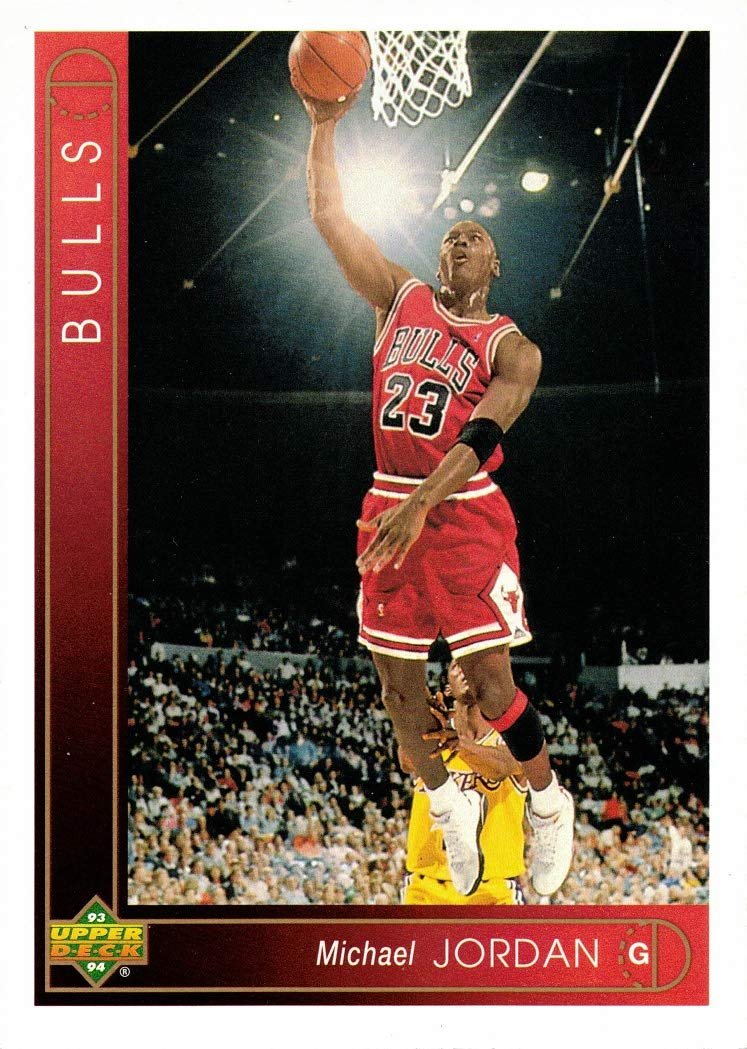
That's not nothing. A shoebox of 90s basketball with fifteen Jordans in it is worth more than the same shoebox without them. But it isn't a retirement plan, and anyone who tells you a 1991 Fleer Jordan is worth a hundred dollars is guessing.
The exception is a perfect copy. Graded a 10, even a common Jordan can sell for many times what a raw one does. You don't have to figure that out; we look at corners and surfaces when we price the lot.
Which 1990s Jordan cards are worth real money?
The shiny and numbered ones. These are the inserts, and we've written a whole guide to what they are. The short version for Jordan:
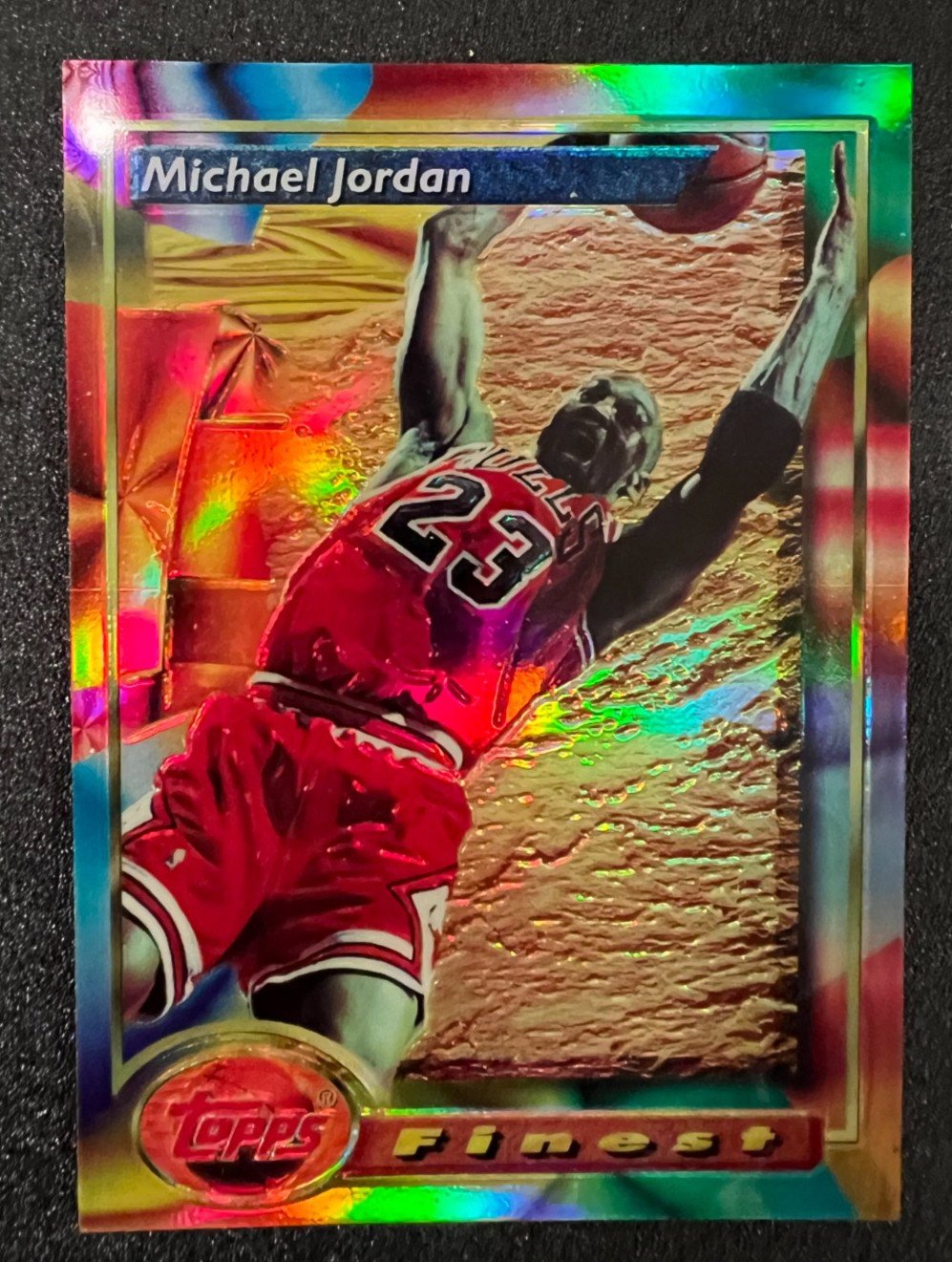
- 1993–94 Finest Refractor. The first refractor Jordan. Mirror finish, and one of the most wanted cards of the decade.
- 1997–98 and 1998–99 Metal Universe Precious Metal Gems. Numbered to 100. The green versions (the first ten) have sold for well into six figures. The red ones are worth thousands.
- 1996–97 and 1997–98 Flair Showcase Row 0 and Legacy Collection. The rare rows of the Flair sets. Row is printed on the back.
- 1997–98 Upper Deck Game Jersey. His first card with a piece of game-worn jersey in it, and very scarce.
- Any Jordan with a serial number, from any brand. "/100," "/50," "1 of 1." Numbered means limited, and limited Jordans sell.
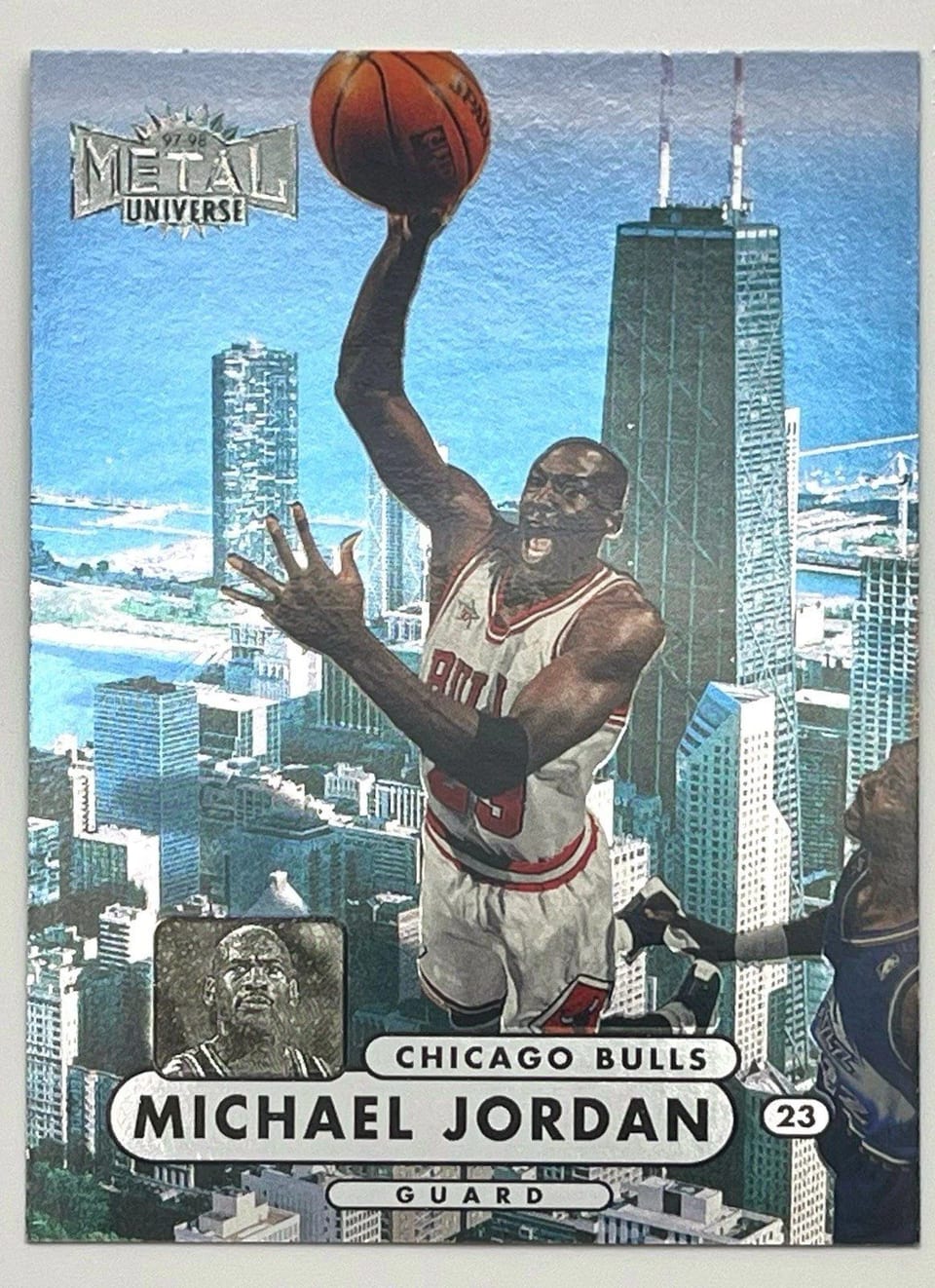
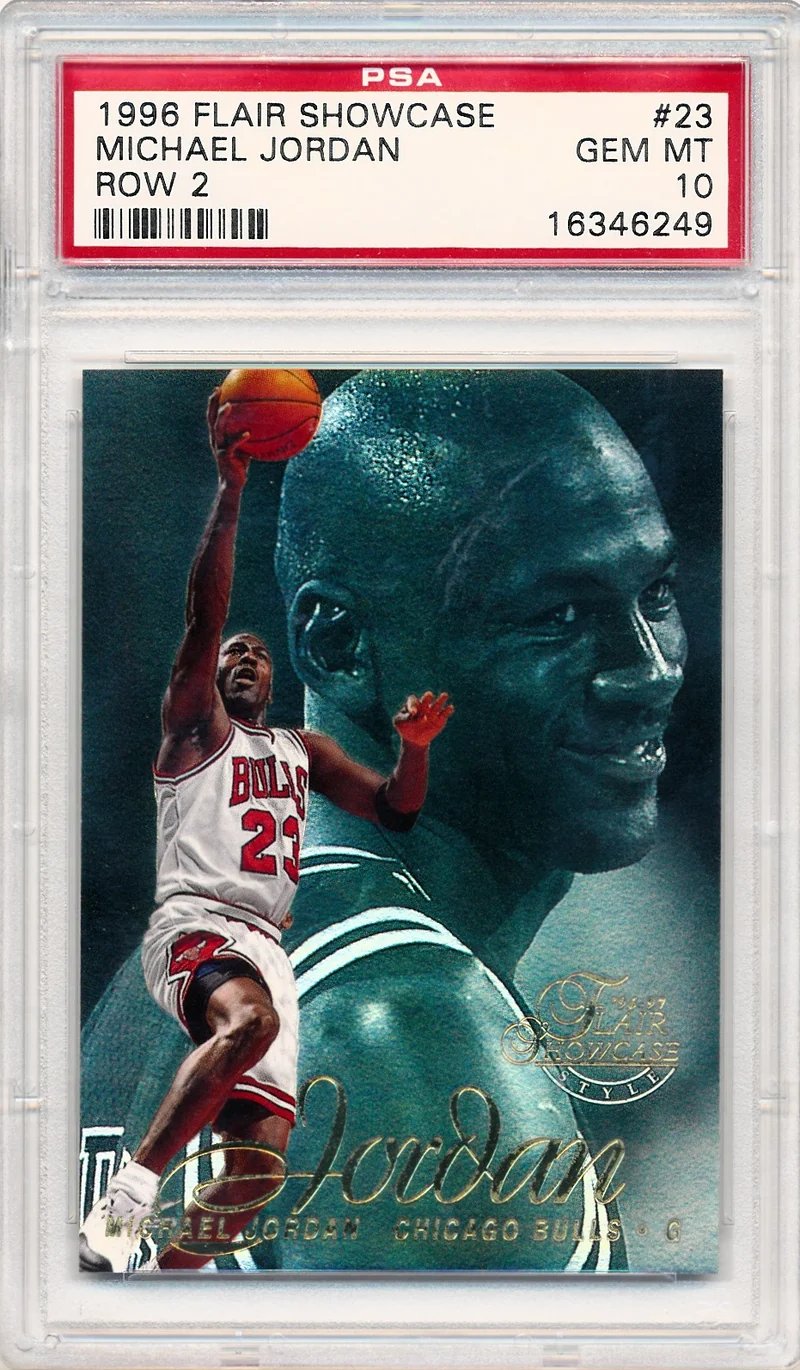
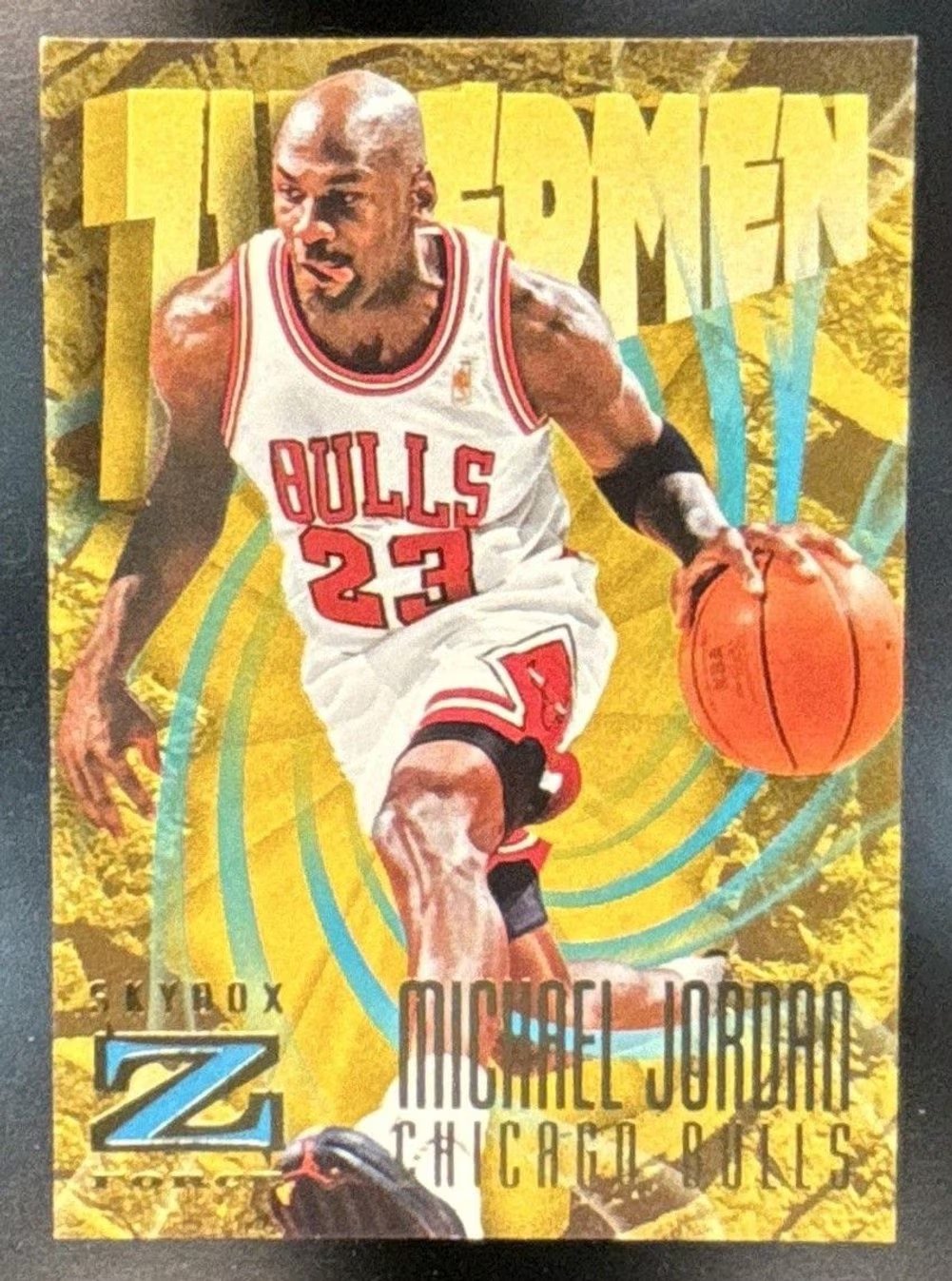
Below those, there's a big middle tier: Beam Team, Skybox Electrified and Larger Than Life, Metal Nuts & Bolts, Ultra Gold Medallion, Upper Deck SP, and dozens more. Most of these sell for somewhere between a coffee and a car payment, depending on the card and its condition. If it's shiny and it's Jordan, put it in the photo.
Is the 1986–87 Fleer Jordan rookie worth a lot?
Yes. It's the most famous basketball card ever made, and a perfect copy has sold for several hundred thousand dollars. A worn one with soft corners still sells for hundreds. The 1986–87 Fleer sticker of Jordan, from the same year, is also worth real money in any shape.
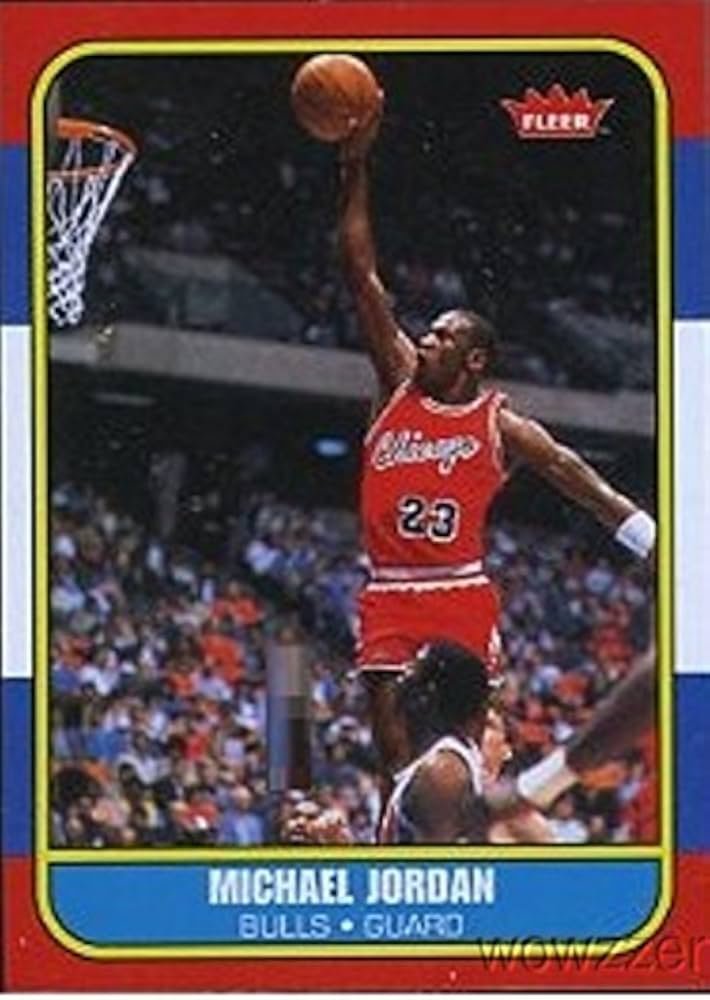
Two cautions. First, it's one of the most counterfeited cards in existence, and the fakes range from obvious to very good. Second, Fleer itself reprinted the card in 1996 for a tenth-anniversary set, and those reprints are common and worth a few dollars. They look almost identical from the front.
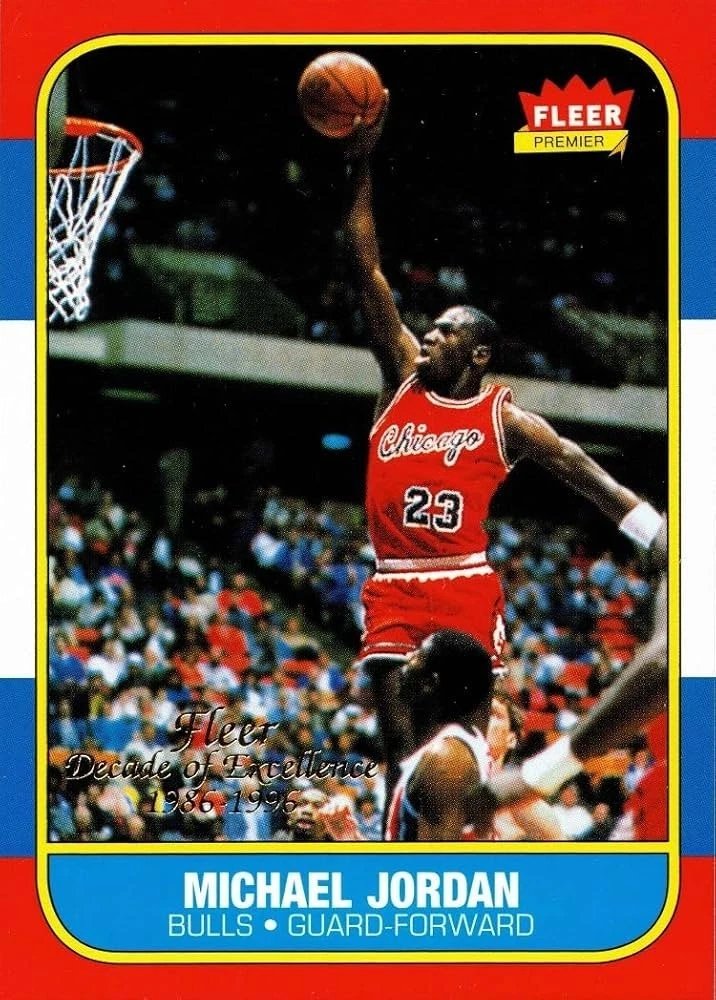
So if you find one: don't get excited or discouraged yet, don't take it anywhere, and don't try to clean it. Send us a clear photo of the front and the back. We'll tell you what we see, and if it looks right, we'll want to look at it in person before either of us puts a number on it. Honestly, that's a card where a second opinion is smart, and we'll say so.
What about Jordan's other cards from the 80s?
His 1987–88 Fleer (second year) and the 1988–89 and 1989–90 Fleer cards are all worth real money, especially in nice shape. If you have any Fleer basketball from before 1990, send a photo of all of it.
Should I get a Jordan card graded before selling it?
Usually not. Grading costs money and takes weeks, and if the card comes back a 7 instead of the 9 you hoped for, you've paid to lower your own price. For the 1986 Fleer or a top insert, grading can make sense, and we'll tell you if we think it does. For everything else, our offer already accounts for condition.
What do I do with the Jordans I found?
Pull every one of them, plain or shiny, and put them on top of the box. Then take the three photos we always ask for: the whole box open, ten or fifteen cards spread face-up, and the Jordans and anything else shiny or sealed in one shot. If it's a box you're clearing from a parent's house, the estate guide covers the rest. If you're not sure the rest of the box is worth anything, the 90s basketball guide will tell you in ten minutes. Either way, we'll come to you anywhere around Richmond, tell you what you have, and pay on the spot.
Found a Jordan? Send a photo of the front and back and we'll tell you what it is.
Get a cash offer